I love cooking with Sous Vide!

First of all, I’d like to thank Snickers for taking over the blog last week.  I have been very busy and really appreciate his attempt to cover for me.  He’s so sweet and helpful and I’m glad you all have had a chance to hear from him.  I will let him do a lot of the writing when we take off on our adventure.  For today, back to food…

I have been using a sous vide machine for about two months now.  I had been thinking about getting one for over a year but it seemed kind of frivolous and I wasn’t sure I would use it enough to justify the expense.  But when I decided to downsize my kitchen, and after doing a lot of research, I realized that this tool could take up a small space and do a lot of work!
IMG_1219
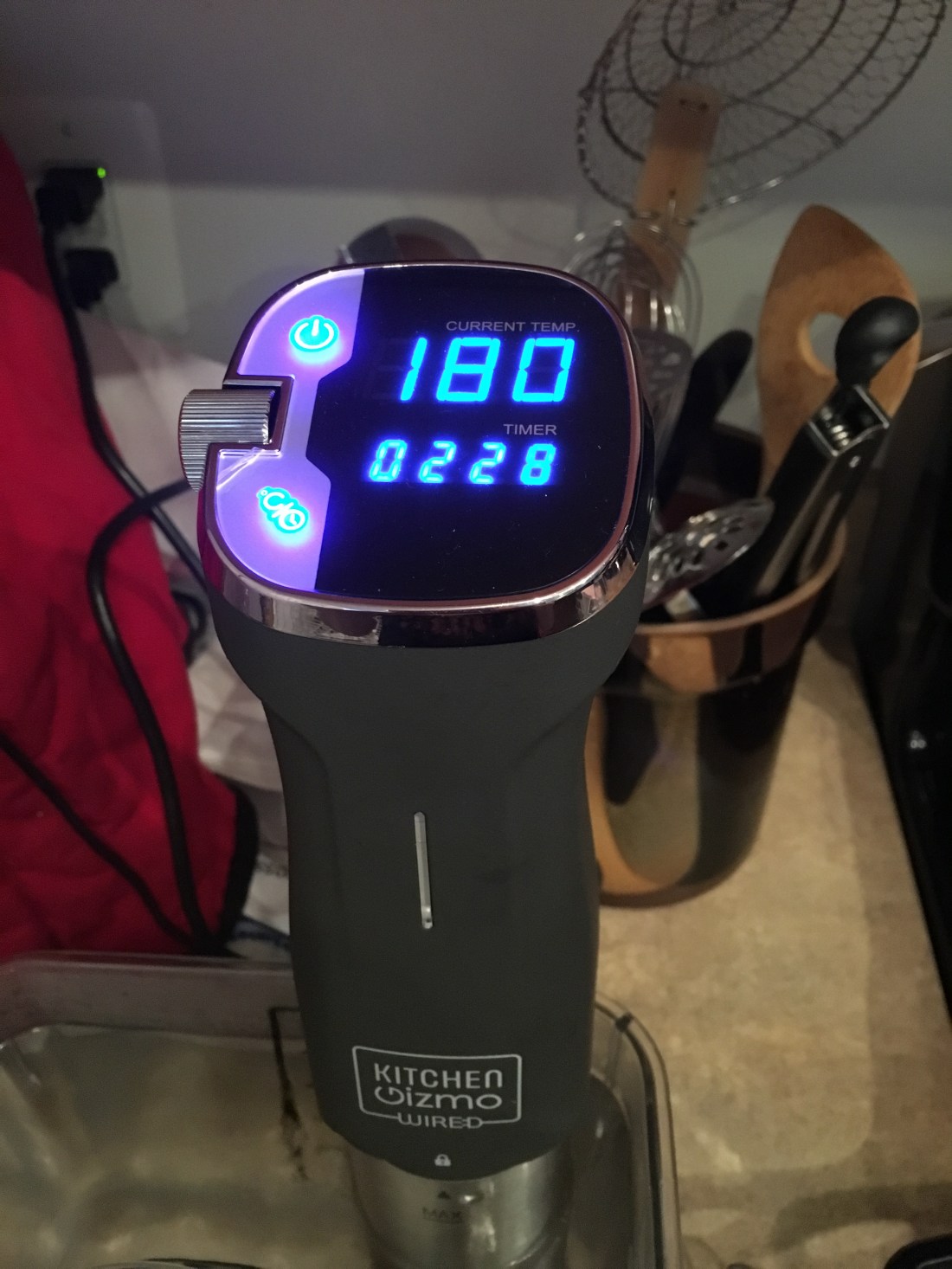
Way too hot for fish!  Needs 130 degrees for only 30 minutes!  This was set up for something else!

“Sous Vide” is French for “under vacuum”.  It describes a form of cooking where you vacuum seal a piece of food, submerge it in water, and cook it slowly at a low, steady temperature.  This ensures that the food never exceeds the perfect level of doneness.  Vegetables stay crisp and don’t lose any nutrition into their cooking water, because they don’t ever contact the cooking water.  Chicken breasts cannot dry out because they don’t get hot enough to squeeze the moisture out of them, as so often happens when they are baked or sautéed.  Beef remains at a perfect medium rare (my preferred temperature for the quintessential steak).  I have even learned to enjoy cooking fish, my kitchen nemesis! 
IMG_1264
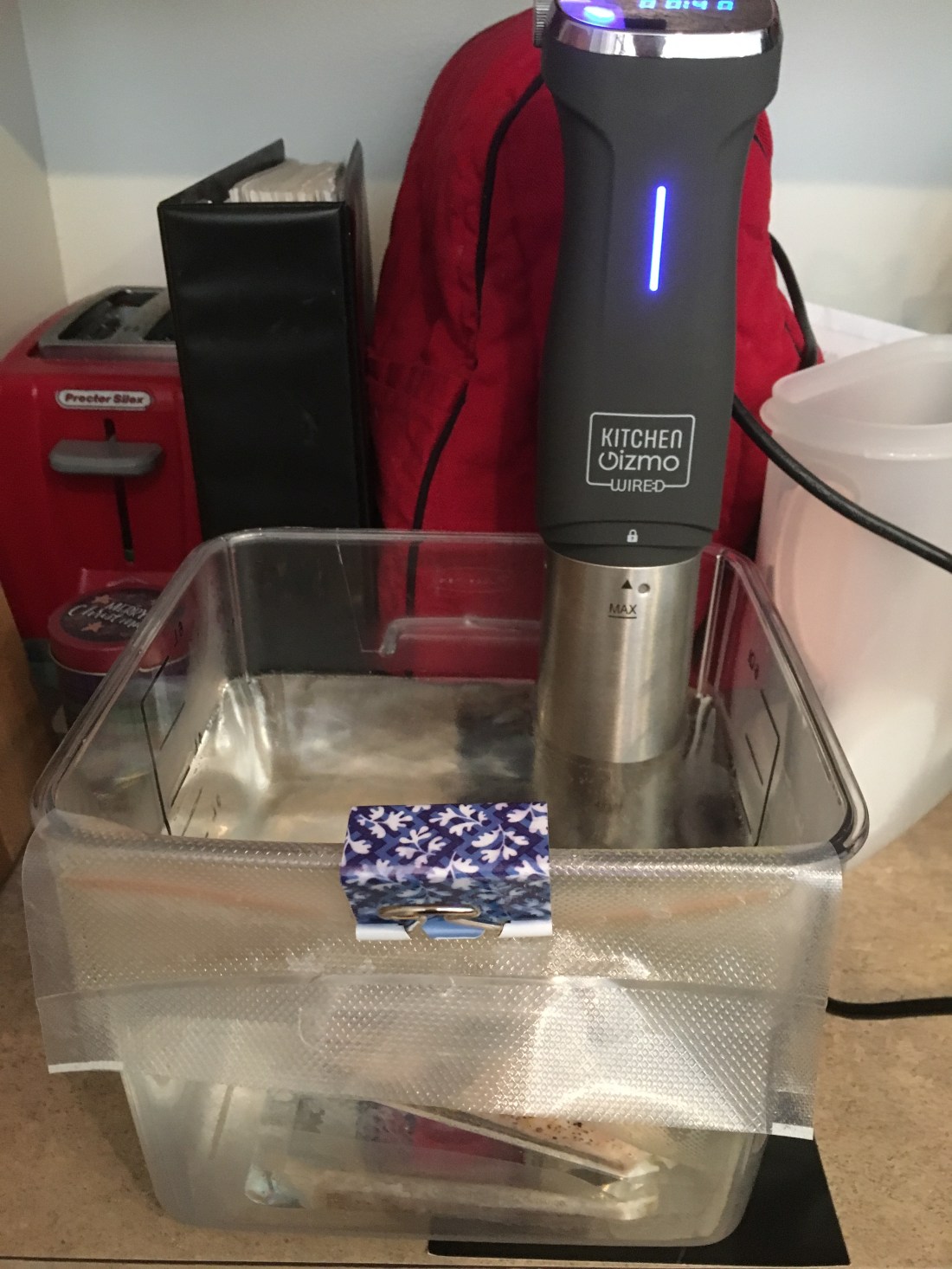
All set up and ready to go!

If you’ve checked out my yogurt post of a week or so ago, you’ve seen my sous vide machine in action.  It’s perfect for keeping the milk and culture mixture at the perfect temperature for curd development.  It makes the entire yogurt making process easy, and relatively care free. 

There are a variety of machines on the market.  Some will attach to your phone via Bluetooth or wifi.  The benefit of these machines is that they come with recipes on your phone or the company’s website, which can make the process pretty foolproof.  I don’t like the idea of any website tracking my cooking and kitchen habits (except this one) so I decided to go a little more basic.  I just fill a container with water, clip the machine onto the edge, making sure that the water is between the minimum and maximum water lines and plug it in.  I can set the water temperature and cooking time, then just press the “on” button and prepare my food while the water heats to the correct temperature.  I have to do a little more research but my kitchen doesn’t tell anyone what I’m doing!

Today, I decided to tackle (hah!) fish in the sous vide water bath.  I found some swordfish steaks at my local grocery store that looked pretty good so decided to give it a try. 

IMG_1257
Swordfish steak with za’atar and sumac


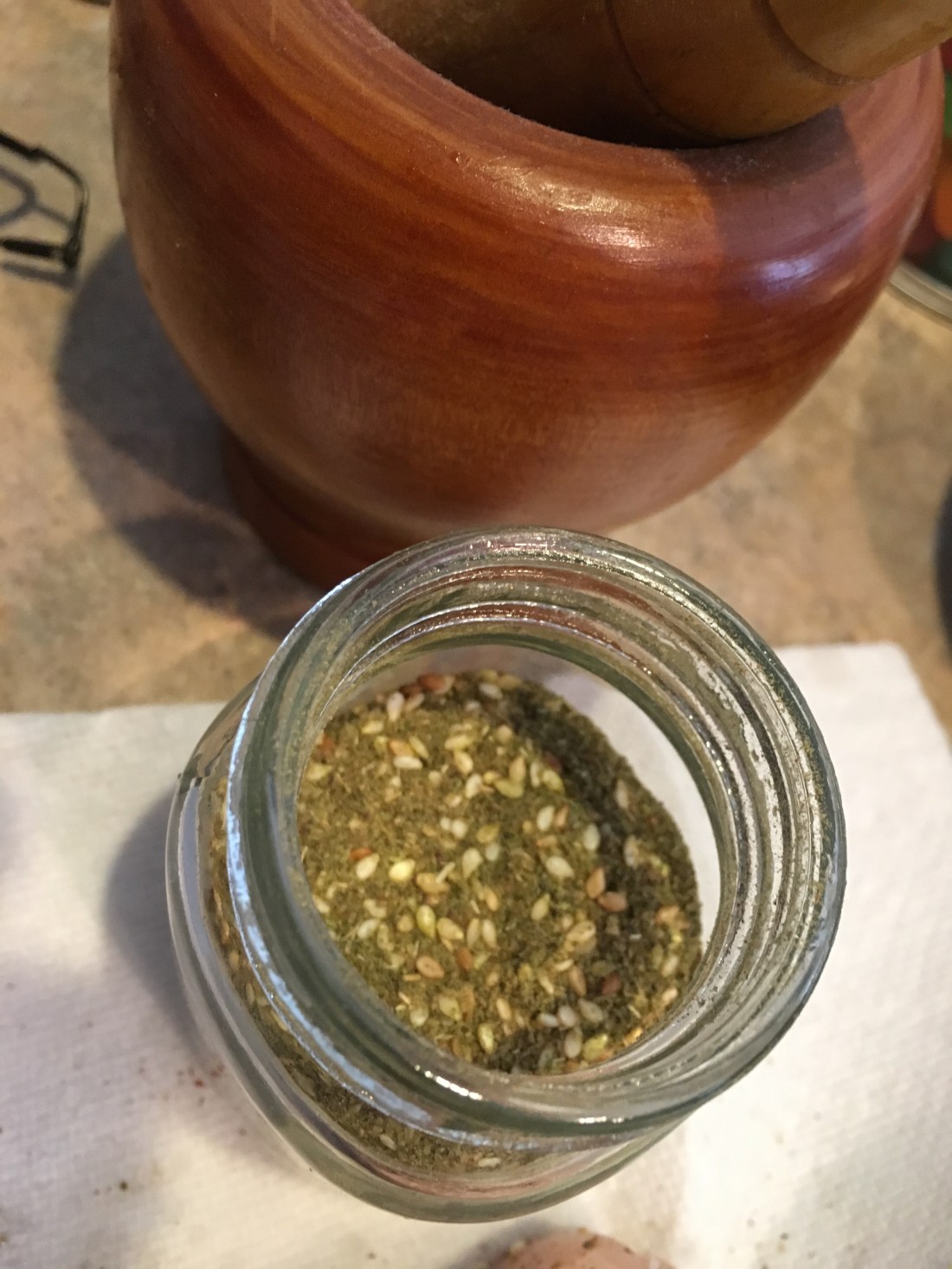
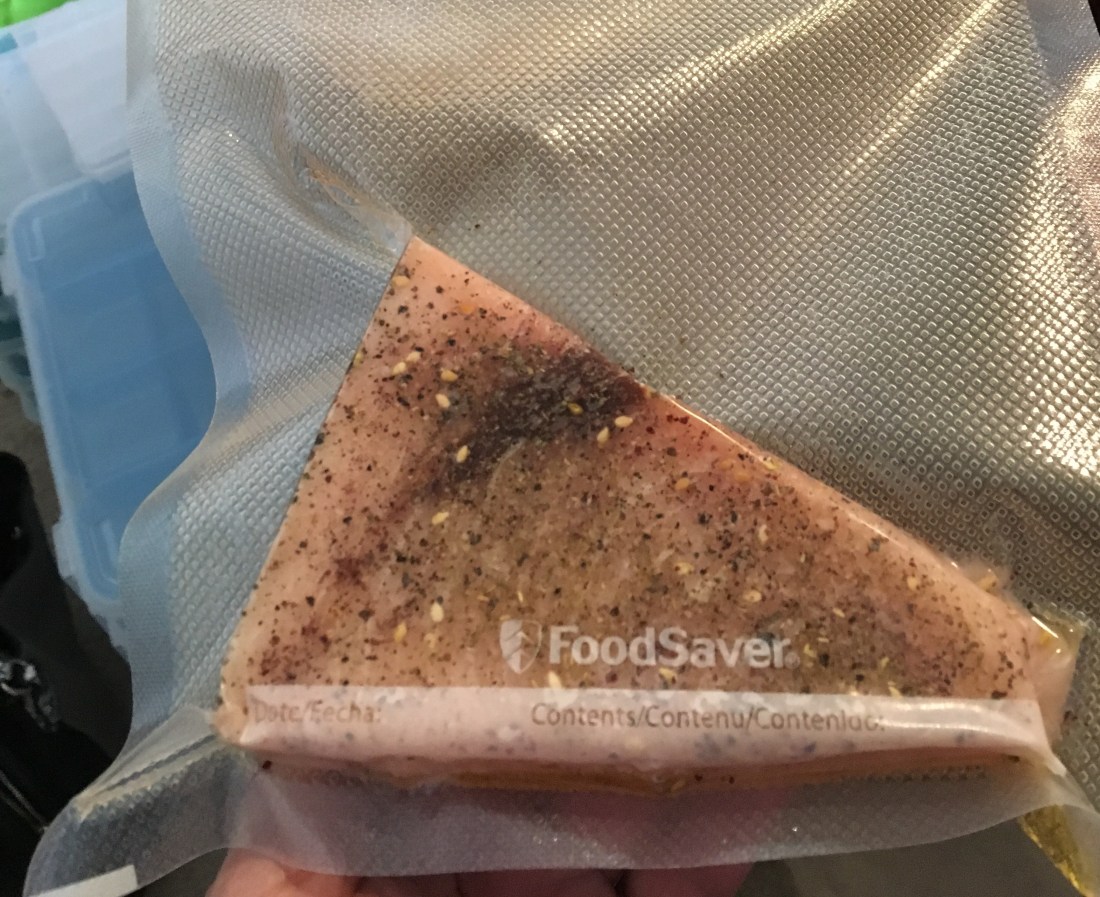
I patted my swordfish steak dry with a paper towel and sprinkled both sides with salt and pepper.  I looked in the spice cupboard and found some Za’tar, a Middle Eastern herb and spice blend containing thyme, sumac, sesame seeds and other herbs.  This is one of my favorite mixtures for chicken and fish as it is flavorful but not overwhelming.  I added a little extra sumac because it adds a citrusy tang and I didn’t have any lemon zest on hand.  I placed it in the vacuum bag with a little bit of olive oil and sealed it up. 
img_1262.jpg

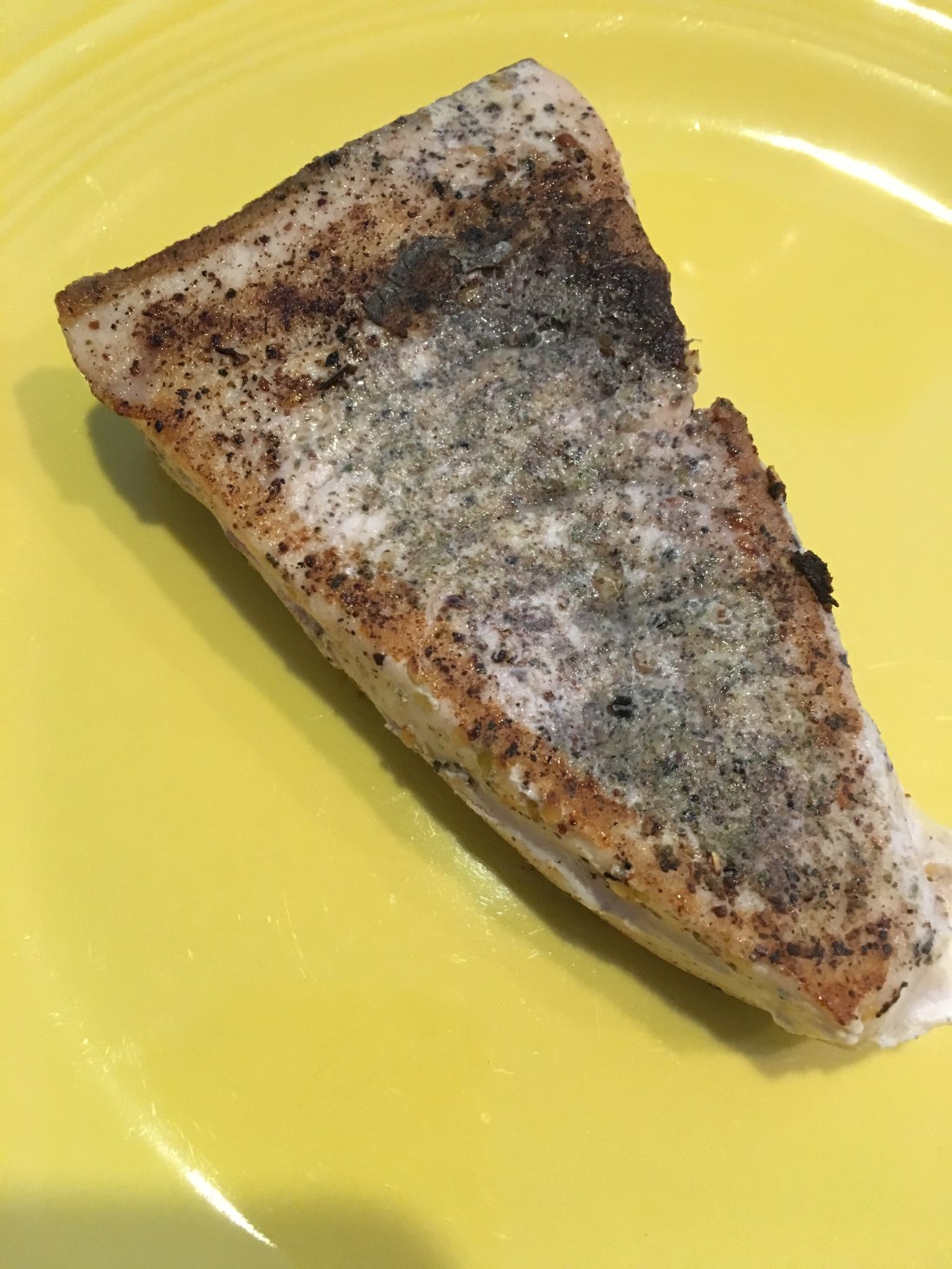
I heat the water bath up to 130 degrees Fahrenheit.  This is the perfect temperature for swordfish, according to the temperature guide that came with my machine.  After clipping the bag of vacuum sealed fish and spices into the water, I set the timer for 30 minutes.  After the timer went off, I took out the packet, dried it off and sliced off the top.  While flavorful and perfectly cooked, the appearance of my steak leaves much to be desired.  It’s pallid, pale, and pasty looking!  Easily fixed!  I heat up my trusty cast iron skillet to rocket temperatures and slap that steak onto the blazing surface.  Wait 30 seconds, flip it over, wait another 30 seconds and a perfectly golden seared surface appears.  Crispy, tasty, and perfectly tender inside, the lovely swordfish steak becomes an elegant entrée. 
IMG_1266
Believe me, it tasted better than it looked!

Sous vide cooking is easy, takes up very little space, and does not heat up a kitchen on a steamy summer day.  An added benefit is that my dish washing water is already hot.  I just need to pour it into the sink and add soap! 
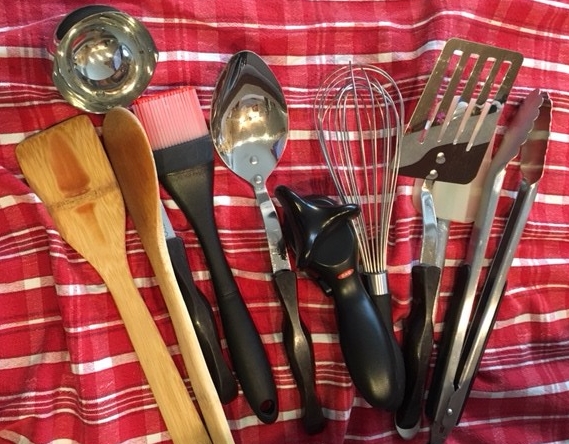
Which 10 Kitchen Utensils Do I Keep?

I am going to be severely downsizing my kitchen in the next few months.  As a part of the process, I have set myself the task of deciding which ten kitchen utensils I consider essential for my cooking style.  Why ten?  I don’t have an arbitrary reason.  The utensil collection may end up being 11 or 12 items at the end.  What I wanted to do was start the process of deciding what tools I cannot live or cook without.  I am not including knives, pots and pans, or appliances in this process because those are for other posts and other spaces in the new kitchen.  This is just about the things that sit in the jar on my counter or in my drawer that I will take with me into the small kitchen. 

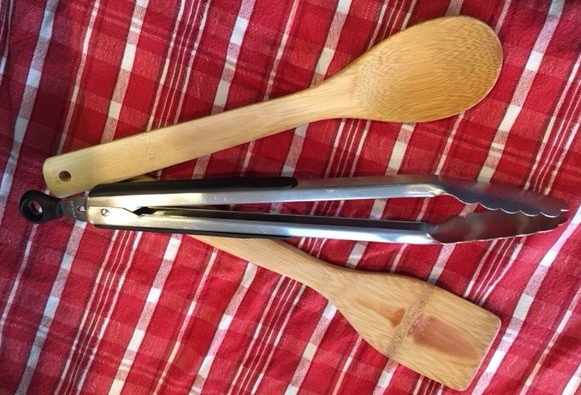
1.      Tongs.  I must have my tongs.  I own two sets and will only take one with me.  So, I think I will take the longer ones.  They are useful for turning meat over, grabbing things out of boiling water, and getting things out of tall cupboards so they need to come along.

2.     Wooden scraper.  I use this thing almost every time I cook in my cast iron (which is almost every time I cook).  It’s great for getting those yummy brown bits off the bottom of the pan into whatever sauce I’m making.  It’s gentle on the surface of my one non-stick skillet.  I replace it every time it gets tired-looking so it is a necessary part of the permanent collection.

3.     Wooden spoon.  Not even optional.  Stirring.

IMG_1141

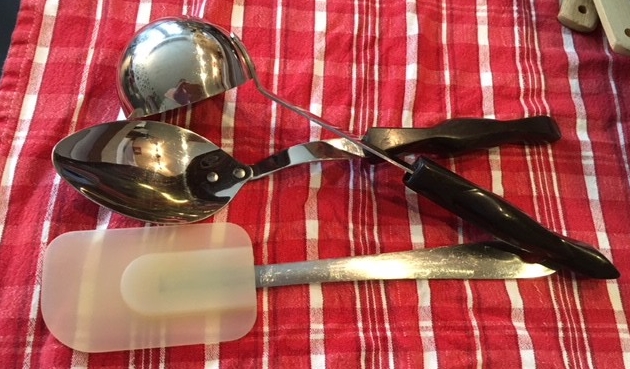
4.     Ladle.  I love making soup.  I usually keep my freezer full of chicken stock so that I can make rich, thick, warm soups all winter and fresh, vegetable-y soups all spring and summer.  You can’t have soup without a ladle to get that lovely broth into your bowl!

5.     Serving spoon.  Being able to scoop a sauce out of a pan and drizzle it gently over a steak or a pork chop is one of the joys of cooking!  You need a large spoon to do it with. 

6.     Silicone scraper.  I don’t like to waste food, so this is a necessity.  I carefully measure and plan my recipes, so I need every morsel to make it into the final product.  When dealing with sticky dough or batter (or marshmallow goo) it’s important to have a heavy-duty scraper to move that stuff around!

img_1142.jpg

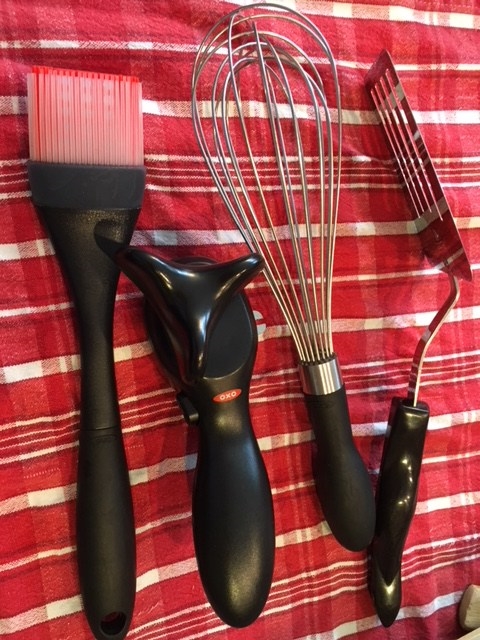
7.     Slotted spoon.  I make a lot of stock and this is helpful for getting the big chunks of bone and vegetables out of the stock before straining.  It’s also good for getting bacon bits and sautéed mushrooms out of a pan so you can use the flavorful fat to sauté other lovely vegetables.

8.     Can opener.  I don’t eat a lot of stuff that comes out of a can.  Except cranberry sauce.  I do like a good turkey sandwich on whole wheat bread with cranberry sauce.  I make homemade for the holidays but do buy the little cans for the rest of the year.  I also sometimes feed Snickers some canned pumpkin if he gets an upset tummy, so I guess the can opener will move into the little kitchen.

9.     Whisk.  I originally had something else on this list but when I went to take everything else out of the utensil jar I realized that I forgot the whisk!  I had to take the zester off the list (it’ll go on another list because I can’t live without my zester)!  It’s impossible to make a smooth sauce or roux without having a good, sturdy whisk.  Scrambled eggs with a fork always end up with bits of white floating around and there’s no way to get egg whites fluffy with a fork.

10.  Pastry brush.  Adding a little spicy or sweet glaze to a piece of chicken as it roasts on the grill or in the oven is a good way to finish an otherwise boring piece of meat.  While it can be done with a spoon, the more even coverage from a silicone brush makes for a more beautiful presentation.

  img_1143.jpg

This is the list of ten items that I am going to keep in my tiny kitchen.  I will give more information about the tiny plan coming to fruition in the next few months, but this is the first step in the process.  I am going to take everything except these ten items out of the kitchen for the next month and see how it goes with only these ten things.  If it works, I’ll keep this list.  If I need to add a few, I’ll keep you posted!